🟢 We are online to assist you
By Noventis.ai
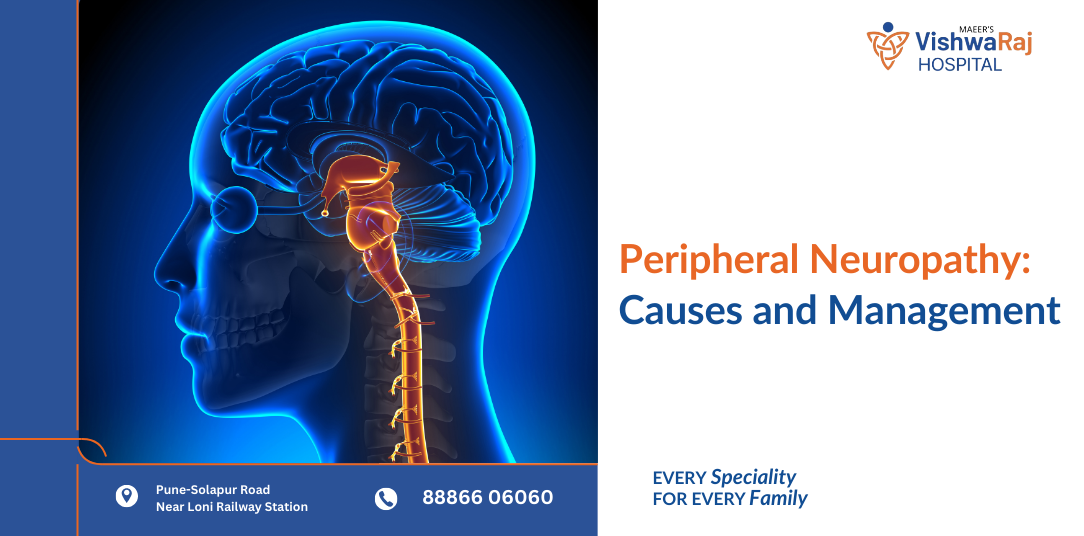
Peripheral neuropathy is a condition that disrupts the functioning of your peripheral nerves, which connect your brain and spinal cord to the rest of your body. This nerve damage can cause tingling, numbness, sharp pain, muscle weakness, also mobility issues. If untreated, it can impact your quality of life.
For control of peripheral neuropathy and also prevention of complications, a personalized management plan with early diagnosis are necessary. The Neurosciences Department VishwaRaj Hospital in Pune is trusted for its advanced diagnostic tools and compassionate care. For mobility and comfort, experts identify underlying causes and provide tailored treatments.
Let’s explore the peripheral neuropathy causes and associated signs.
Peripheral neuropathy will usually develop in a more gradual manner, and it starts within either the feet or hands. Spotting symptoms early can aid in improvement.
Common Symptoms
Major Causes
Addressing the root cause is the first step to effective peripheral neuropathy treatment. At VishwaRaj, Multispeciality Hospital in Pune, a team utilizes advanced testing to identify the precise cause of each patient’s condition.
Don’t wait until symptoms progress – early action is crucial. To get a more thorough check-up, connect with a neurology expert now.
Peripheral neuropathy isn’t a single disease, but a broad category of disorders affecting different types of nerves. Understanding the type is crucial for tailored treatment.
Often this type affects one nerve because of injury, localized pressure, or repetitive motion like in carpal tunnel syndrome.
Multiple nerves suffer damage simultaneously, starting typically from the feet and hands and is most often linked to toxins or diabetes.
This type disrupts the nerves controlling automatic body functions such as blood pressure, heart rate, digestion, and bladder function.
Sensory nerves are primarily impacted, causing symptoms like numbness, tingling, or pain, usually in the extremities.
Motor nerves are damaged, leading to muscle weakness, cramps, twitching, or difficulty moving.
At the Neurosciences Department VishwaRaj Hospital in Pune, specialists employ clinical assessments and nerve conduction studies to identify neuropathy types, ensuring the accuracy of targeted treatment.
Wondering how experts find out what’s causing your symptoms? Let’s explore the peripheral neuropathy tests involved.
Peripheral neuropathy isn’t a single disease, but a broad category of disorders affecting different types of nerves. Understanding the type is crucial for tailored treatment.
For identification of potential causes, a specialist asks about all of your symptoms, health conditions like diabetes, a family history, medications that you use, and some lifestyle factors.
In order to assess nerve function, muscle strength is carefully checked along with reflexes and also with balance. The ability of one to feel sensations like touch, vibration, and temperature is also very carefully checked.
These tests help detect infections, thyroid disorders, vitamin deficiencies, diabetes, and autoimmune markers that could cause neuropathy.
● Nerve Conduction Studies & Electromyography (EMG):
Electrical tests measure how well nerves and muscles are working, pinpointing the type and location of nerve damage.
● Imaging Tests (MRI or CT scans):
Imaging may be used to rule out structural issues—like herniated discs or tumors—that could compress nerves.
● Nerve Biopsy (Rare):
Sometimes, a small nerve tissue sample is taken for microscopic examination if the cause is still unclear after other tests.
Seeking relief from nerve pain and a means to get your mobility back? Let’s explore treatment options that can help you reclaim your life.
While not all neuropathies can be completely cured, many symptoms can be managed, and further nerve damage can often be prevented.
Treating conditions such as diabetes, infections, or vitamin deficiencies can help prevent further nerve damage and improve symptoms.
Pain relievers, certain antidepressants, and anti-seizure drugs (like gabapentin or pregabalin) help control nerve pain and discomfort.
Exercises within physiotherapy strengthen muscles improve balance and reduce fall risk.
For the overall nerve health with the symptom control, support comes from a healthy diet with some regular exercise. Quitting smoking and limiting alcohol will also help.
Capsaicin creams and lidocaine patches provide relief from pain at specific sites when applied topically to the affected areas.
In advanced situations, nerve blocks or TENS (transcutaneous electrical nerve stimulation) are employed to address ongoing pain.
VishwaRaj Hospital’s Neurosciences Department offers personalized, holistic care, led by a team of specialists—including neurologists, pain management experts, and physiotherapists—to maximize recovery and comfort.
What happens if neuropathy goes untreated? Let’s look at the potential complications and the importance of prompt action.
While not all neuropathies can be completely cured, many symptoms can be managed, and further nerve damage can often be prevented.
Untreated peripheral neuropathy can result in serious and at times permanent complications:
Managing peripheral neuropathy begins with understanding your symptoms, obtaining an accurate diagnosis, and following an individualized care plan. With advanced diagnostics, a multidisciplinary team, and patient-centered care, VishwaRaj Hospital is a leader in peripheral neuropathy treatment in Pune. From expert neurologists to cutting-edge technology, comprehensive solutions are available to help you live a healthier, more active life.
If you’re searching for experienced peripheral neuropathy doctors in Pune or want a precise diagnosis and actionable treatment plan, VishwaRaj Hospital is here to help every step of the way.

Prioritize Your Thyroid Health with VishwaRaj Hospital, Pune

Gastroenterologist Specialist in Pune: Get Expert Treatment at VishwaRaj Hospital

How to Access Free Pediatric Heart Surgery in Pune District – Step-by-Step Guide for Parents (2025)
Interventional Neurosurgery in Pune – Advanced Care at VishwaRaj Hospital, Loni Kalbhor